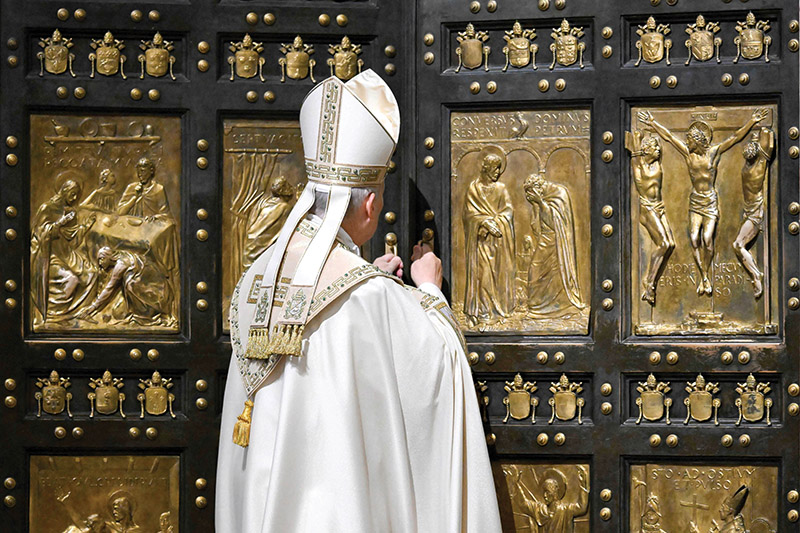
(New American Bible Revised Edition, NABRE), Leviticus 25:10 – You shall treat this fiftieth year as sacred. You shall proclaim liberty in the land for all its inhabitants. It shall be a jubilee for you, when each of you shall return to your own property, each of you to your own family.
Introduction
As someone who is new to the Catholic faith, I am also new to the idea of Jubilee!
I see the headlines of doors closing, basilica’s re-opening, and my girlfriend asking me if we can travel to Italy before the end of 2025. Like I’m sure many of you are, I was left confused yet intrigued into this sacred tradition.
Oh, was I naive to think this would be a short little blog post. Little did I know that this journey would turn into a deep dive of historical tradition, papal proclamations, and new reformation. The above passage was written prior to my descension into what I like to call the Jubilee Rabbit Hole.
And so, the deep dive shall commence…
Old Testament Foundation
As alluded to above, the entire basis for the year and tradition of Jubilee comes from this Old Testament passage in Leviticus below:
(New American Bible Revised Edition, NABRE), Leviticus 25:2-10
2 Speak to the Israelites and tell them: When you enter the land that I am giving you, let the land, too, keep a sabbath for the Lord. 3 For six years you may sow your field, and for six years prune your vineyard, gathering in their produce. 4 But during the seventh year the land shall have a sabbath of complete rest, a sabbath for the Lord, when you may neither sow your field nor prune your vineyard. 5 The aftergrowth of your harvest you shall not reap, nor shall you pick the grapes of your untrimmed vines. It shall be a year of rest for the land. 6 While the land has its sabbath, all its produce will be food to eat for you yourself and for your male and female slave, for your laborer and the tenant who live with you, 7 and likewise for your livestock and for the wild animals on your land.
We see this often throughout the Old Testament, that the number 7 hold’s much more importance than the modern divisions of 10 or 5 that we are used to. This obviously goes back to Genesis, when God created the world in 7 units (using the word unit here as the “days” in Genesis are not thought of as modern 24-hour days), with the 7th unit being designated solely for rest as well as the fourth commandment. We still mirror this tradition in the modern catholic faith with celebrating mass on Sunday or after sundown on Saturday as the “day” is considered to be done.
We don’t celebrate the sabbath year as described above in Leviticus 25:4-7. For us Jubilee holds the place as our holy year of pilgrimage and forgiveness.
8 You shall count seven weeks of years—seven times seven years—such that the seven weeks of years amount to forty-nine years. 9 Then, on the tenth day of the seventh month let the ram’s horn resound; on this, the Day of Atonement, the ram’s horn blast shall resound throughout your land. 10 You shall treat this fiftieth year as sacred. You shall proclaim liberty in the land for all its inhabitants. It shall be a jubilee for you, when each of you shall return to your own property, each of you to your own family.
A key thing to note here is that the original Jubilee cycle was based on the 49-year cycle, not the 50, or 10-year cycle.
Where the timeline begins
Namely, Moses wrote Leviticus after the Israelites left Mount Sinai, between 1440 and 1400 BC during the 40 years they wandered in the wilderness before entering the Promised Land.2
With some rough math that means over 3425 years has passed since the original Jubilee. Meaning that if Jubilee was celebrated every 49 years (as it is proclaimed in the bible), then technically there should have been ~70 years of jubilee in human history up to this point.
So, what does the actual, modernly celebrated Jubilee timeline actually look like? Well, quite different…
Assumed Jubilee Years in BC (Approximate)
| 1445 | 710 |
| 1396 | 661 |
| 1347 | 612 |
| 1298 | 563 |
| 1249 | 514 |
| 1200 | 465 |
| 1151 | 416 |
| 1102 | 367 |
| 1053 | 318 |
| 1004 | 269 |
| 955 | 220 |
| 906 | 171 |
| 857 | 122 |
| 808 | 73 |
| 759 | 24 |
Aproximate vs. (Actual) Jubilee Years in AD
| 26 | 761 | 1545 (1525 &1550) |
| 75 | 810 | 1594 (1575 & 1600) |
| 124 | 859 | 1643 (1625 & 1650) |
| 173 | 908 | 1692 (1675 & 1700) |
| 222 | 957 | 1741 (1725 & 1750) |
| 271 | 1055 | 1790 (1775 & 1800) |
| 320 | 1104 | 1839 (1825 & 1850) |
| 369 | 1153 | 1888 (1875 & 1900) |
| 418 | 1202 | 1937 (1925 & 1950) |
| 467 | 1251 | 1986 (1975 Closing of the holy doors ceremony established by the Pope & 2000 simplified ceremony) |
| 516 | 1300 (1300) – Western Christianity, Jubilee was changed to 100 years As well as visiting the basillica of St. Peter & Paul | 2035 (2025 & 2050) |
| 565 | 1349 (1350 changed to every 50 years in 1343) added visits to Archbasilica of St. John Lateran | 2084 (2075 & 2300) |
| 614 | 1398 (1390 start of 33 year) added the Basilica di Santa Maria Maggiore | …. |
| 663 | 1447 (1423 end of 33 year & 1450 switched back to 50 years) | …. |
| 712 | 1496 (1500 marks end of 50 year and start of 25 decreed in 1473) visit some specified church in their own country | 2525 (2525) The next day where the biblical timeline lines up with the modern timeline. |
There have been 82 Jubilees! So, we have had approximately 12 more than if we followed the biblical timeline.
Although there is a lot to unpack here, the general gist of what’s going on here is that up until the year 1300, the Jubilee celebration was on course with the biblical timeline outlined in Leviticus.
Once Catholicism entered the modern era, the Popes began to change and interpret the Jubilee year into relevant increments (some based on average life span at the time, other’s trying to bring it back to biblical tradition, etc.)
Also, something to note is that from the year 1300 to 1390, all four basilicas were added as pilgrimage sites during the year.
Lastly, an interesting fact is that around the years 1300, and 2525 are the only two times in modern catholic history where the modern calendar and the biblical calendar line up. Making it only occur once every 1225 years. So, if the human race still exists, what an exciting time it will be in 500 years!
The Unwailing of the Holy Doors
The four basilicas are deeply intertwined with the year of Jubilee starting in the year 1300. The faithful were originally encouraged to visit each of the basilicas in order to receive the indulgence that they seek. And to “complete” the spiritual journey we are all called to have during the holiday.
In the modern world there are countless of pilgrimage sites across the world that the faithful can visit instead of booking a flight to Rome, however it is always encouraged to visit the holy sites in Vatican City.
There are also three ceremonious actions that occur, the opening (public) in December of the prior year, closing (public) in December of the Jubilee year, and the unwailing (private) of the door which occurs 10 days after the closing.
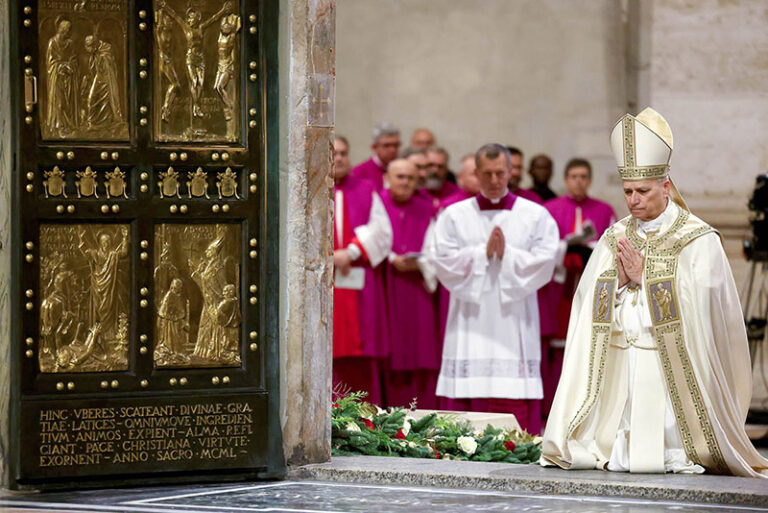
Opening and closing is straightforward, it is the physical opening of the doors for the laity to access them, this is done by the Pope.
Unwailing is a private ceremony that is described below:
The technicians of the Fabric of St. Peter’s—the so-called sampietrini (in the other papal basilicas, technicians of the Governorate of Vatican City State)—will construct the brick wall inside the Basilica to seal the Holy Door.
There are also liturgical prayers that are prayed, and the theme of these ceremonies are that although the physical doors are being closed, the spiritual doors to God’s love will remain open forever.
For more information on this process, please visit Jubilee: Rite for the closing of Holy Door at St. Peter’s Basilica – Vatican News
Basilica di San Giovanni in Laterano
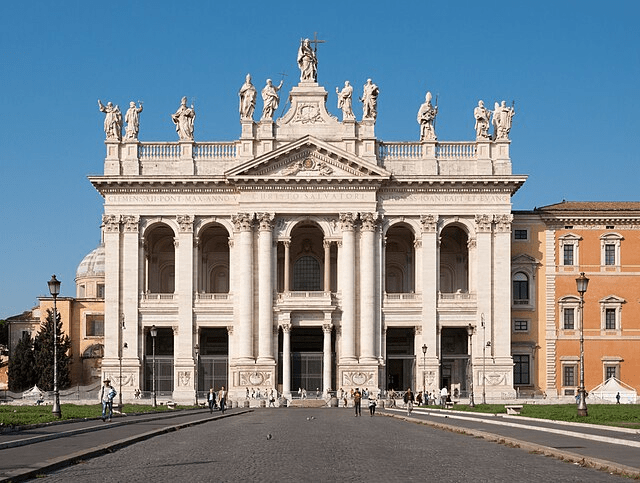
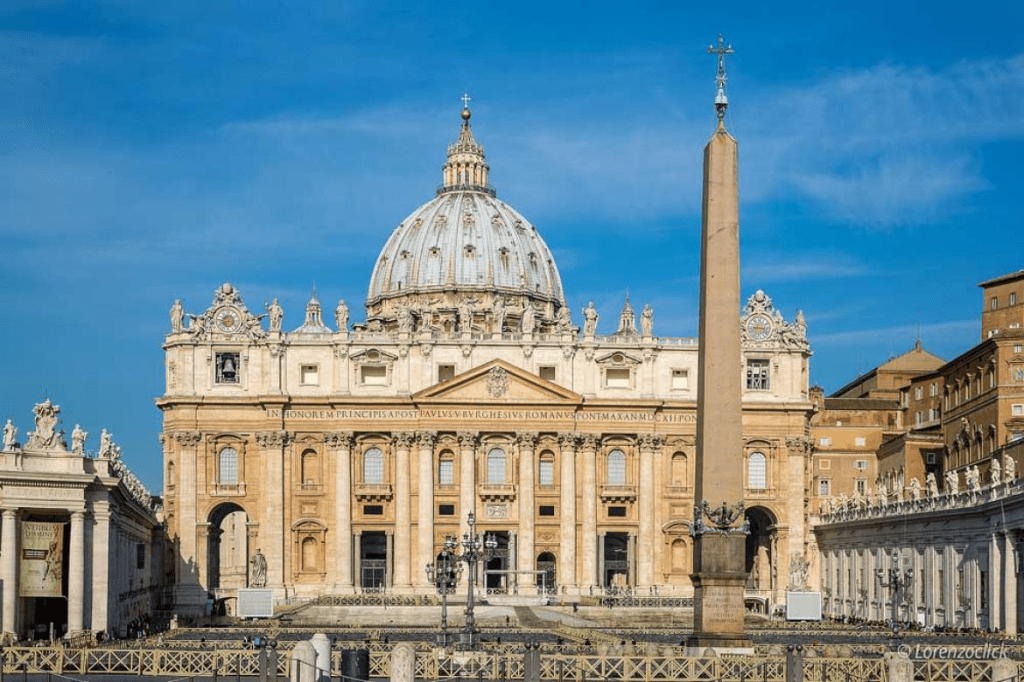
Basilica di San Pietro in Vaticano
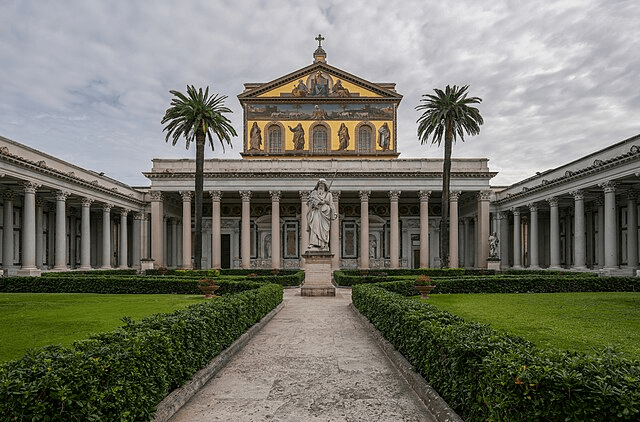
Basilica di San Paolo fuori le Mura
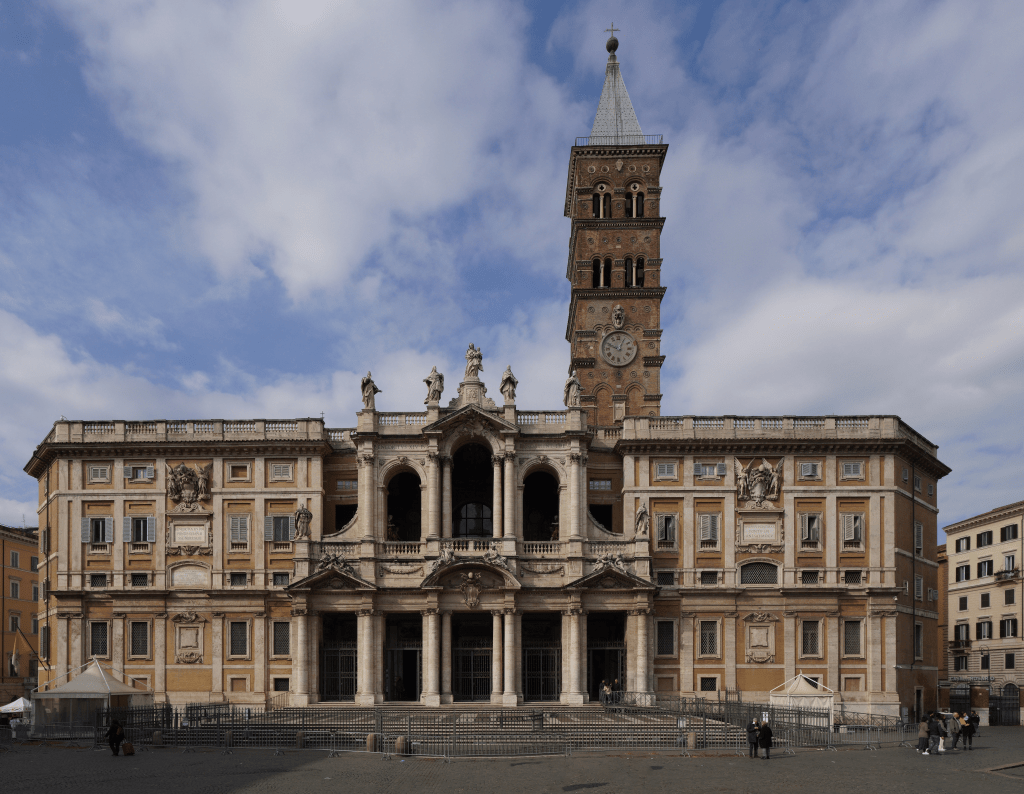
Basilica di Santa Maria Major
Indulgences:
Indulgences have a complicated history. I remember in my middle school years, my history teacher told the class that the catholic church used to sell indulgences for money, that forgave the sins of the laity. Along this journey I have found this to be false. However, the mystery surrounding this tradition is still intriguing.
For this post, I will refer to the brilliant explanation and analogy from Catholic.com
In short, after God forgives one’s sins, there typically remains temporal punishment due as a result of that sin. An indulgence is what lessons, or removes, that remaining punishment. It’s kind of like the kid who breaks his neighbor’s window. The neighbor can forgive the child for the offense, and yet the kid still needs to help pay for the broken window.
As one part of Jubilee years, we may obtain a plenary indulgence!
For more information and a better explanation please visit Comprehensive Guide to Partial and Plenary Indulgences | Catholic Answers Tract
Conclusion:
We must remember that although the holy tradition of Jubilee, changes from time to time, that the theme remains the same from over 3,000 years ago.
- Atonement (where our trinitarian God is deeply infused with our world)
- Rest (Keeping the sabbath holy, spending more time than normal to rejuvenate and glorify God)
- Spiritual pilgrimages (step outside of your normal environment, routine, and habits, to make new paths to God’s mercy)
- A deeper understanding of grace and forgiveness (Indulgences, and the repayment of sinful behaviors)
- A preservation of God’s gift to us (Gratitude for nature, our own bodies)
And also remember, that even though we are closing the door on the previous year (or collection of years). Our faith continues to grow, expand, and evolve as we age.
Although I am saddened that I just missed this opportunity to take full advantage of the 2025 Jubilee, I am excited for the Jubilee in 2050, hopefully I will see many of you there alongside me 🙂
References
- Jubilee 2025: What it is and How to Participate | Catholic Life – The Roman Catholic Diocese of La Crosse
- When was Leviticus written? | GotQuestions.org
- Jubilee Years List
- Jubilee in the Catholic Church – Wikipedia
- When Is the Next Jubilee Year? – Chabad.org
- Jubilee: Rite for the closing of Holy Door at St. Peter’s Basilica – Vatican News
- Jubilee 2025 | USCCB
Called to Order
Thoughtful Catholic Reflections
Disclaimer:
The opinions of Called to Order and it’s author Ryan Fegan, are personal beliefs and should not be held to the same level of importance as official church or biblical doctrine and/or teachings.
Keep in mind all dates used in this post are just approximations and are used for the sole purpose of general correlation and visualization.
 Called to Order
Leave a comment